
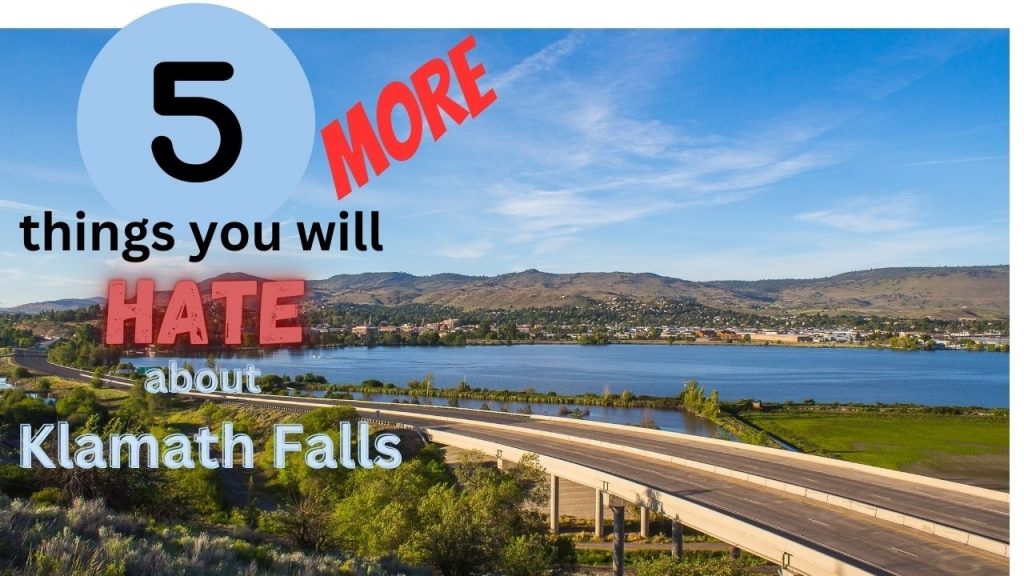
Thinking about relocating to Klamath Falls, Oregon? As a local real estate agent who loves this community, I believe in giving you the full picture — the good and the not-so-good.
My earlier video on reasons to reconsider Klamath Falls got a ton of questions, so here are five more things to honestly weigh before you make the move.
#1 The Short Growing Season Can Frustrate Gardeners
Klamath Falls sits in a high desert climate at roughly 4,100 feet elevation, which means all four seasons — but a compressed window for growing. Summer highs can reach the 90s, yet nights regularly drop into the 40s and 50s. The low humidity can be a challenge and of course watering is mandatory. Snow on the Fourth of July isn’t unheard of. If you’re an avid gardener, especially one transplanting from a lush region like the Pacific Coast or the Midwest, prepare for a rude awakening. Many beloved crops simply don’t thrive here. Local gardeners swear by a 90-day rule: choose early-producing varieties that mature in 90 days or less. And be wary of those tempting early-season displays at big-box garden centers — one more hard frost can wipe out everything you’ve planted.
#2 Klamath Lake Is Not a Recreational Lake
Upper Klamath Lake is one of the largest freshwater lakes in the Pacific Northwest, and on a map it looks like waterfront paradise. But don’t let the acreage fool you. The lake suffers from significant water quality issues, including notorious algae blooms in summer that make swimming and water sports a no-go for much of the year. Midges — tiny flying insects that hatch in massive clouds from June through August — add another layer of misery for anyone hoping to enjoy the outdoors near the water. If jet skis, water skiing, or a day at the beach are part of your dream lifestyle, Klamath Lake will disappoint. Rocky Point, on the lake’s western edge, offers cleaner water and a better experience — but the majority of the shoreline simply isn’t what out-of-area buyers picture when they think of lakeside living.
#3 Wildfire Smoke Can Severely Impact Summer Air Quality
Klamath Falls enjoys beautiful sunny summers — most of the time. But the region sits in a part of the West that has increasingly dealt with wildfire smoke, both from local fires and from plumes drifting down from as far away as Canada. On the worst days, authorities recommend staying indoors with air purifiers running. If you or a family member has asthma, allergies, or other respiratory conditions, this is a serious quality-of-life consideration. It doesn’t happen every day, and Klamath Falls is far from unique in the Pacific Northwest when it comes to smoke season — but it’s a real factor to plan for.
#4 The Climate Is Harsh and Unpredictable
Beyond the short growing season, Klamath Falls throws weather surprises that keep even long-time residents on their toes. Last winter brought heavy, wet snowfall that downed trees, knocked out power for extended periods, and sent temperatures below zero. The winter? Barely any snow. In summer, violent thunderstorms can roll in out of a clear sky, drop a 15-minute downpour, and vanish just as fast. If you’re coming from a more temperate climate — Southern California, the Willamette Valley, or the coast — this high desert variability can be a genuine adjustment. The flip side, of course, is that the dramatic seasons are part of what makes Klamath Falls so beautiful and unique.
#5 The Water Rights Battle Is Ongoing and Exhausting
If you plan to put down roots in the Klamath Basin, you need to understand the water wars. Since 2001, farmers, ranchers, Native American tribes, wildlife agencies, and environmental groups have been locked in a complex, often contentious battle over who gets water from the Klamath River system. When snowpack is good, there’s enough to go around. In dry years, the fight intensifies — and so do the headlines. Lawsuits fly, politicians weigh in, and the agricultural economy can take real hits. For anyone invested in local farming, rural land, or simply the long-term stability of the region’s economy, this is an issue you’ll want to follow closely. There is no easy resolution in sight.
So, Should You Move to Klamath Falls?
Despite these challenges, I genuinely love Klamath Falls — the affordability, the outdoor recreation, the tight-knit community, and the stunning natural beauty of Southern Oregon. My goal with content like this isn’t to scare you off, but to make sure you arrive with eyes wide open. The people who thrive here are the ones who came prepared. If you’re doing your research on relocating to Klamath Falls, Oregon, I’d love to help. Reach out anytime — let’s talk about whether this community is the right fit for you.