Klamath Falls keeps showing up on "best places to move" lists — best place to retire in Oregon, most affordable, best for an outdoorsy lifestyle. So people are doing exactly what you'd expect: googling the cost of living here before they make a call. And then they come to me confused, because the numbers they're finding don't agree with each other at all.
I get it. I went and looked myself recently, and within a couple of hours of searching I found one site quoting an average home price around $270,000 and another quoting $502,000 for the same city. That's not a rounding error — that's two completely different pictures of what it costs to live here. So let's go category by category and I'll shoot you straight on what I'm actually seeing.
Housing: Why the Number You Find Depends on Who's Counting
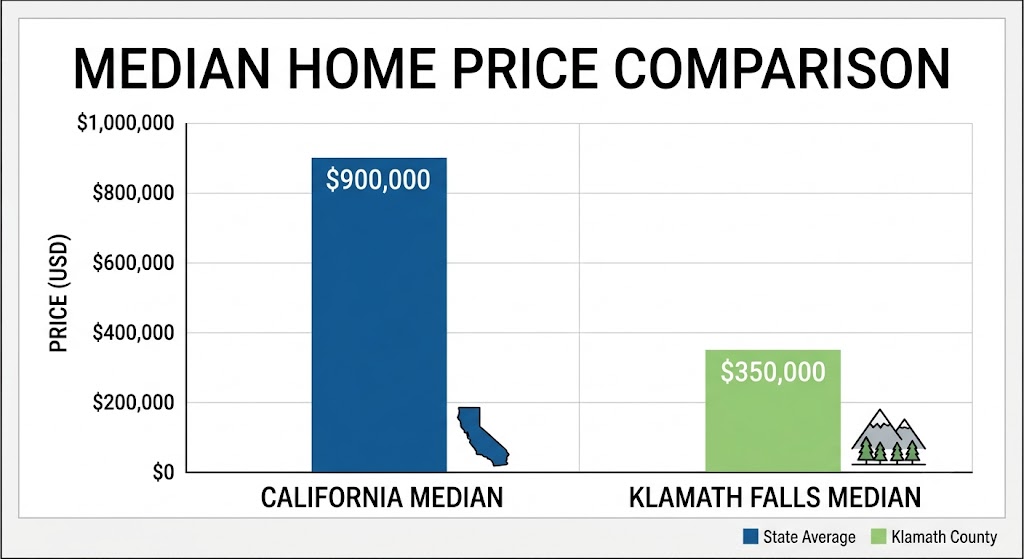
Right now, home sales in Klamath Falls have been averaging around $340,000. That's been fairly steady for a while — it's not the $502,000 figure floating around out there. My best guess on why the numbers vary so much: some sites are pulling single-family sales only, and others are blending in everything — manufactured home parks, larger acreage, even some of our bigger ranch properties that sell for well into seven figures. Average those together and the number climbs fast.
If you want a number you can actually plan around instead of an aggregator's best guess, that's exactly what I'm here for — I'd rather pull the current MLS snapshot for the specific price range or neighborhood you're looking at than have you working off a website that doesn't know the difference between a starter home and a ranch. My Complete Relocation Guide breaks the market down further, and if you're weighing us against a bigger California market, my honest California comparison walks through that gap in real numbers.
Groceries and Everyday Staples: At or Below National Average
I travel around with the dogs a fair amount, so I get to peek at grocery prices in other towns pretty regularly. Milk, bread, eggs, general staples — Klamath Falls tends to run at or slightly below the national average. So the things you're buying weekly, the day-to-day cost of just living your life, aren't where this city gets more expensive.
Utilities: One Spot Where We Do Run Higher
This is the category where Klamath Falls tends to sit above the national average — I've seen the figure 7% mentioned in a few places when I was digging into this. I don't have a firm answer on exactly why our utility costs run a bit hot, but it's worth budgeting for honestly rather than pretending it isn't there.
Transportation: Plan on Owning a Car
If you're coming from a city where you lean on a train or bus system to get around, that's not really how it works here. Klamath Falls is a car-dependent community — getting to work, getting groceries, getting anywhere you need to go typically means driving yourself. So if your current cost of living doesn't include a car payment, insurance, and gas, factor that in when you're comparing numbers city to city.
Healthcare: Solid for Everyday Needs, a Drive for Specialists
Klamath Falls is fortunate to have Sky Lakes Medical Center, a full-service regional hospital, which is a big part of why our healthcare costs tend to land right around the national average for routine care. Where it gets more complicated is specialty care — if you need a particular specialist or a specific procedure, there's a real chance you're driving to Medford or Bend, the way a lot of local residents already do. The same goes for after-hours veterinary emergencies — we don't currently have a dependable 24-hour vet in town, so an emergency after hours usually means a trip to Central Point, about 75 miles and roughly an hour and a half away.
Taxes: No Sales Tax, But Income Tax Takes a Bite
Oregon is one of the states that gets some pushback here, especially if you're coming from somewhere like Nevada with no personal income tax. Oregon's income tax is real, and it scales with what you earn. But it's usually offset at least partly by having no state sales tax at all — nothing added at the register, on anything. Property taxes vary by where you're looking and where you're coming from, but relative to a lot of other markets, they tend to run lower here too. Between the lack of sales tax and generally moderate property taxes, that income tax hit is often softened more than people expect going in.
A quick note: tax situations are personal, and rates and brackets can shift year to year — this is general information, not tax advice, so loop in a CPA for anything specific to your situation.
It's Not Just About the Numbers
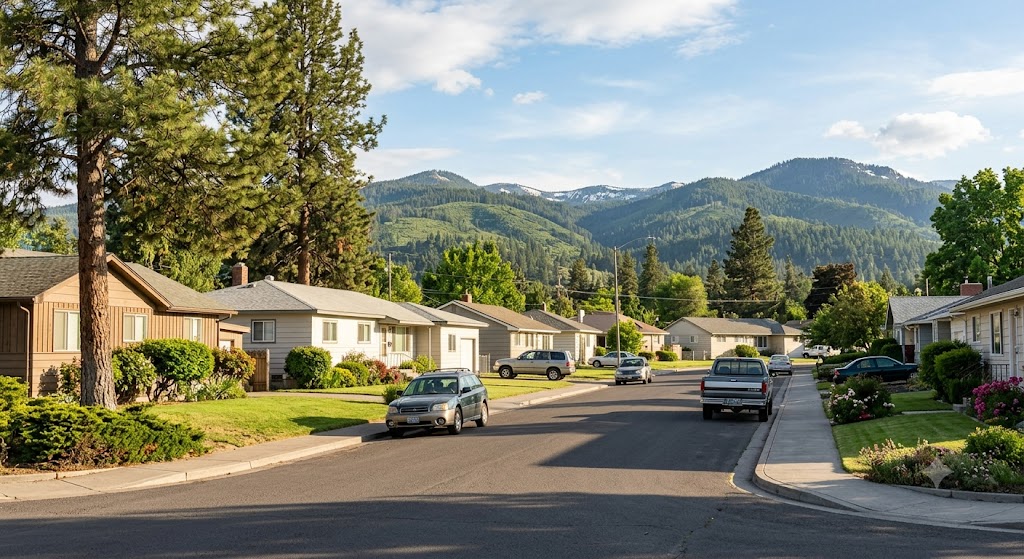
Here's my honest take, for whatever it's worth: I'm not someone who's purely driven by finding the cheapest possible number on a spreadsheet. If somewhere costs a little more but fits the life I actually want to live, I'd rather be there than somewhere cheaper that doesn't fit. Some people are flexible enough to make any location work, and that's great. But if you're someone who wants scenery, water, trees, the outdoors, and a slower pace — where you're not sitting in a 45-minute commute or losing an hour just running an errand — that's worth something the spreadsheet doesn't capture.
I can get to Home Depot and be back in 20 minutes. That's not nothing. For me, quality of life is the real number, and I'm happy living it here in Klamath Falls.
If you're weighing a move and want numbers you can actually trust instead of another conflicting website, get a real home valuation or check my Klamath Falls real estate FAQ for more answers — or just reach out and I'll shoot you straight.